What Is Lenticular Printing? A Guide to Moving and 3D Prints
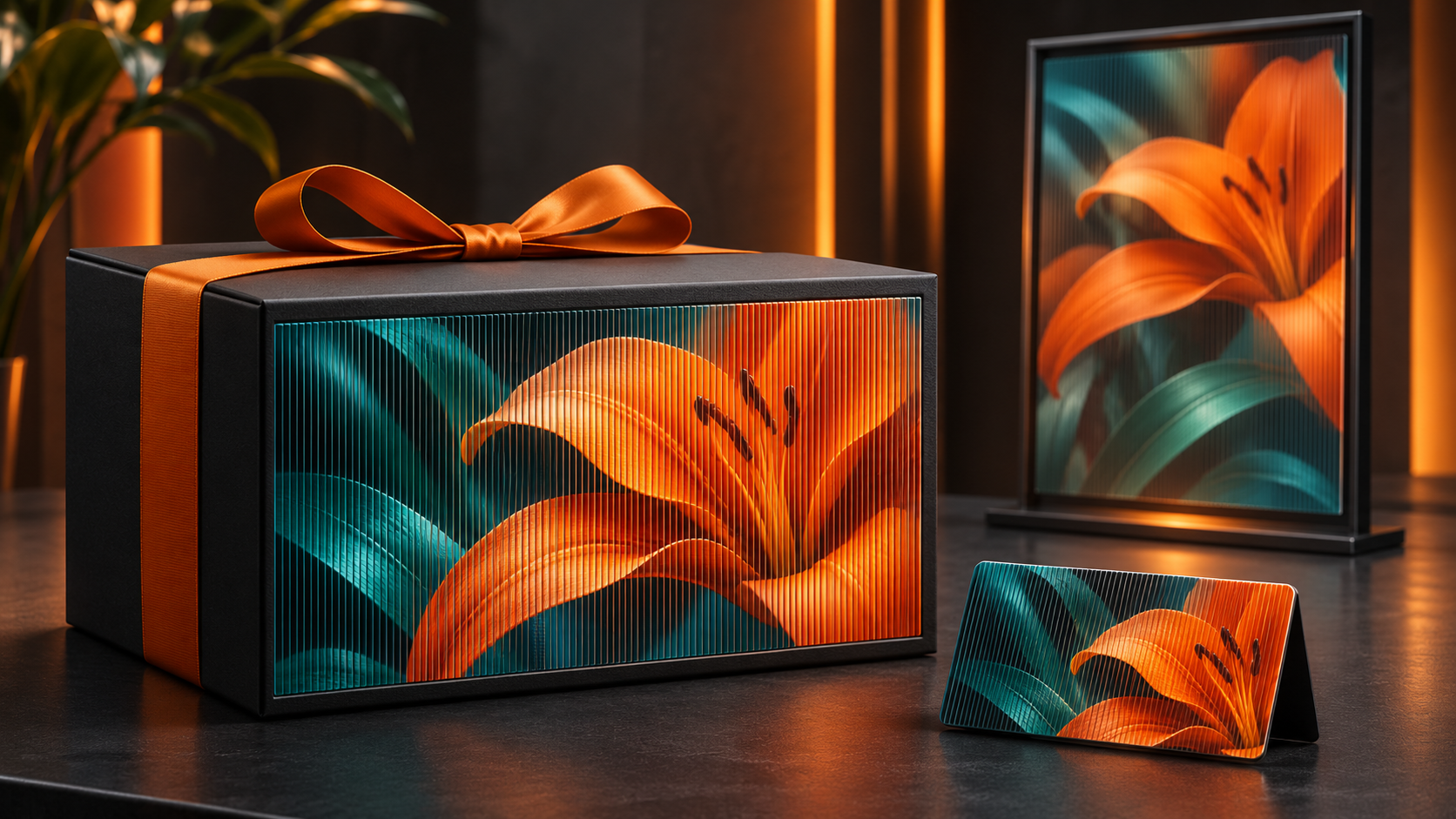
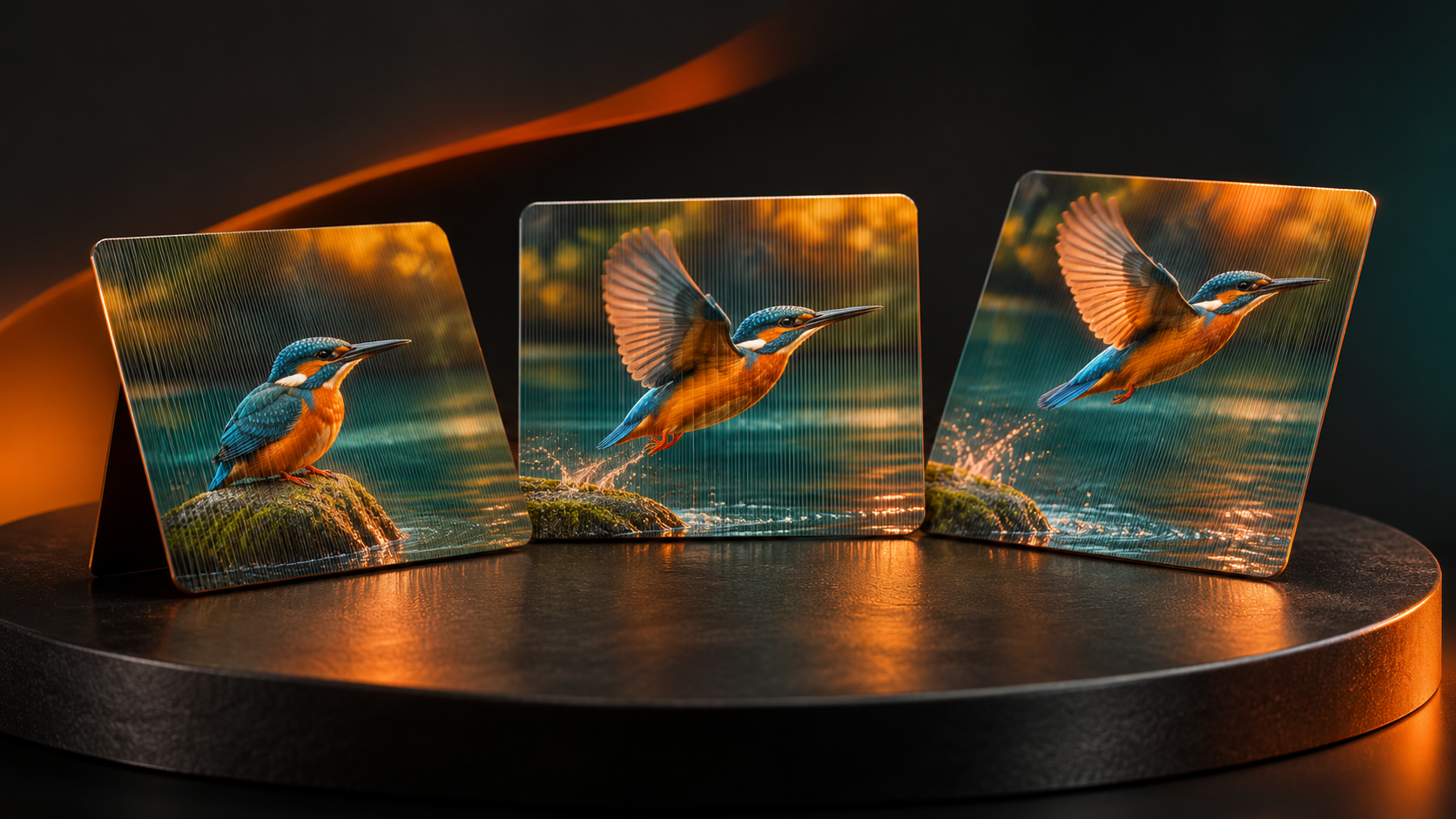
Lenticular printing is a visual communication technique that allows different images, movement, or three-dimensional depth to be perceived as the viewing angle changes. A specially prepared image works together with a lenticular lens containing many small lenses on its surface. When viewers move the product slightly or walk past it, the scene they see changes. A printed surface can therefore offer a narrative that goes beyond a single photograph.
What does lenticular printing mean?
Lenticular printing is a visual communication technique that allows different images, movement, or three-dimensional depth to be perceived as the viewing angle changes. A specially prepared image works together with a lenticular lens containing many small lenses on its surface. When viewers move the product slightly or walk past it, the scene they see changes. A printed surface can therefore offer a narrative that goes beyond a single photograph.
A logo changing into another image as you turn a card in your hand, objects appearing at different distances within a poster, or a short movement appearing on product packaging are examples of this technique. The effect does not come from a screen playing a video. The way the image is prepared and the optical structure of the lens work together. The starting point for understanding lenticular printing is therefore to consider the print and lens as one system.
Why does the image change with the angle?
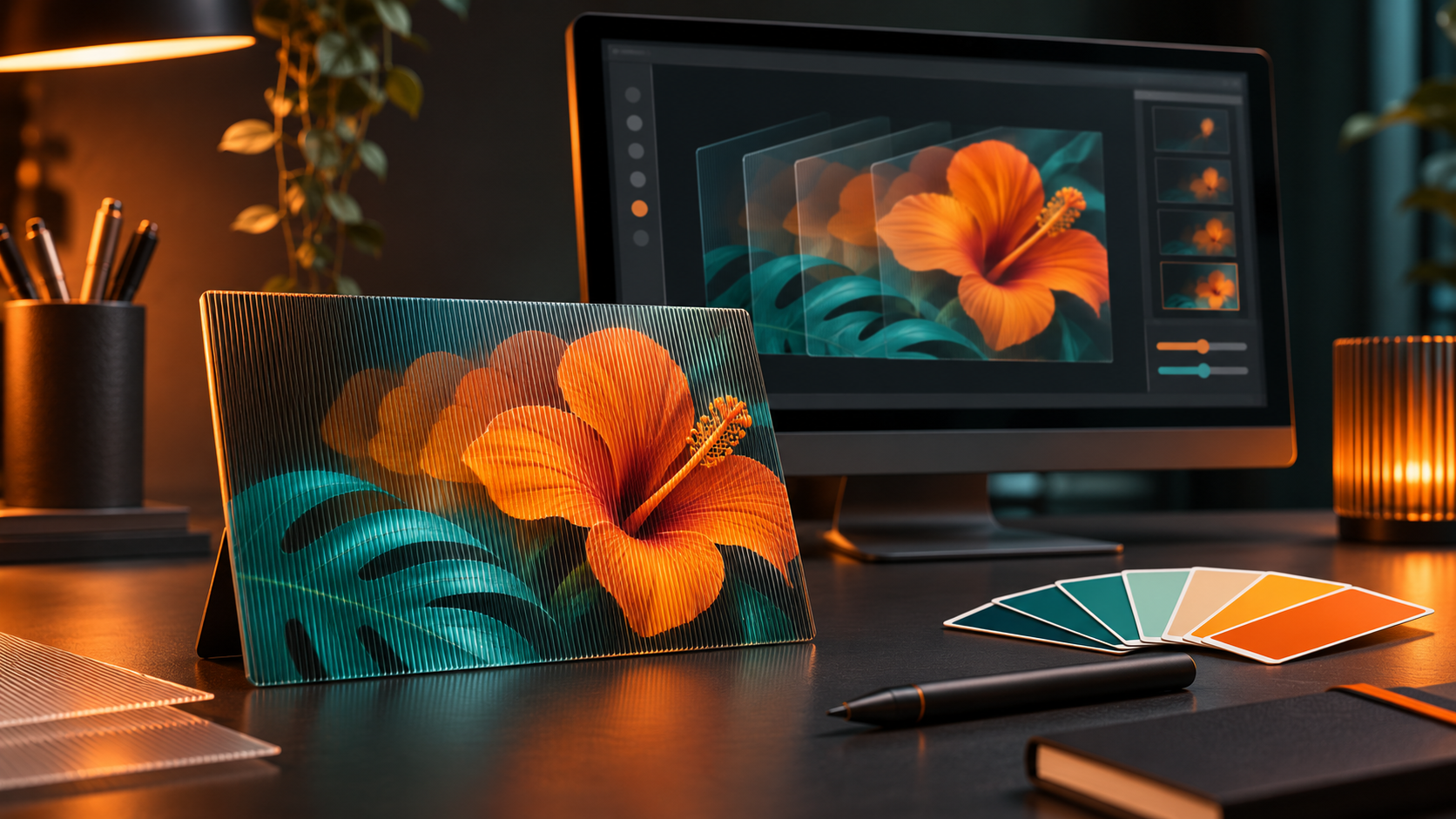
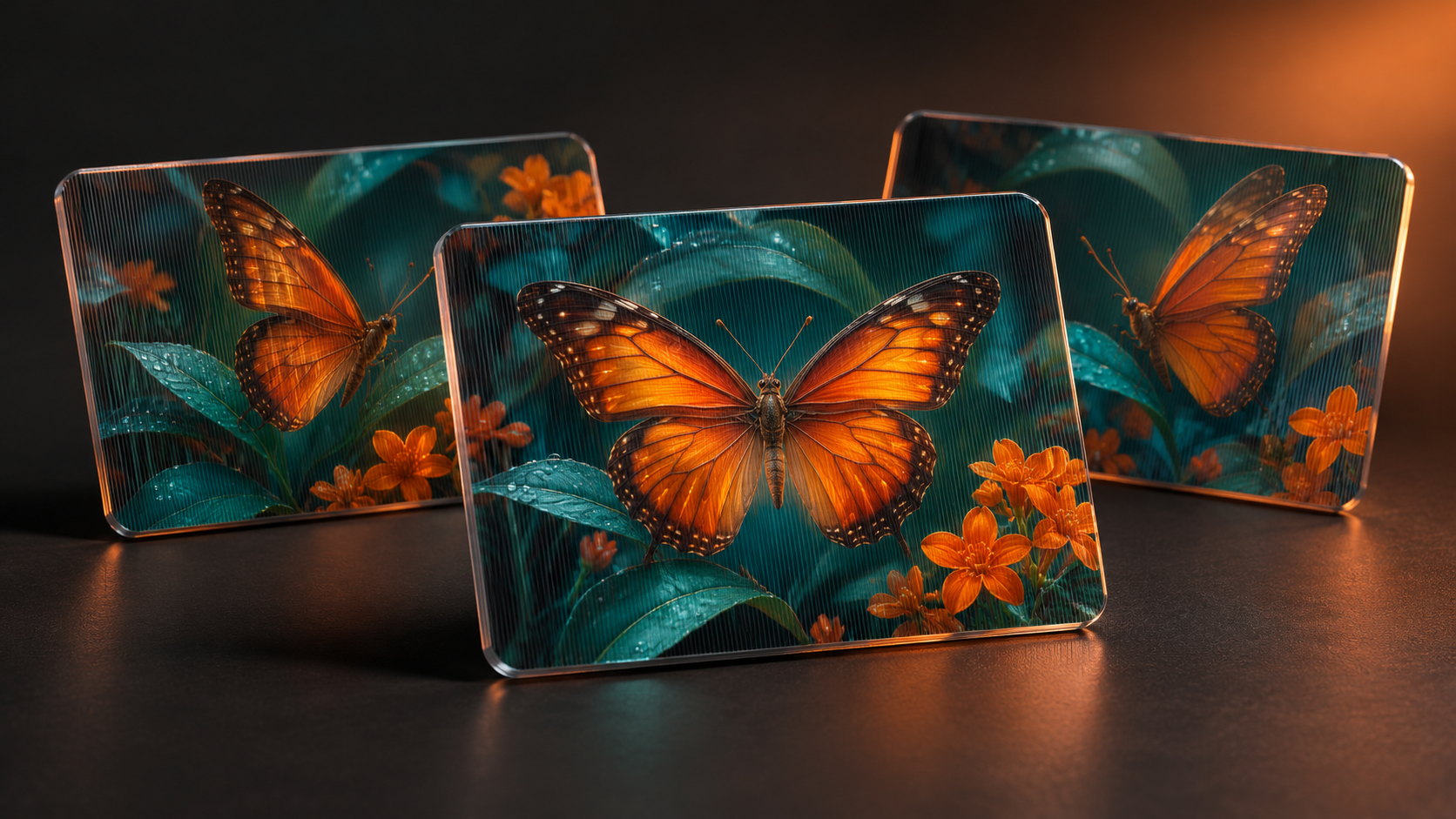
In lenticular production, multiple images or viewpoints are combined as narrow strips. This preparation, called interlacing, arranges the images in a specific pattern. The lenses on the surface direct the light coming from these strips in different directions. When the viewer's angle changes, the combination of image components they see changes as well. Depending on the chosen visual structure, the resulting experience is perceived as transformation or depth.
This explanation does not mean that the same image file can be used for every project. Examining a small card in the hand and viewing a large panel along a walking route are different conditions. Image size, the intended effect, and viewing distance are considered together. Lens selection is also connected to these conditions. Once it is clear where and how the project will be seen, design decisions have a more solid foundation.
Which effects can be used in lenticular printing?
One of the easiest examples to understand is the flip effect. With this approach, a transition between two or more images is seen from different angles. For example, the first scene might show a closed product box and the second might show its contents. Such a structure can be considered for brands wishing to communicate a campaign message in two stages. Viewers should be able to follow the product's main message while noticing the change.
With a depth effect, the aim is for the elements in a scene to be perceived at different distances from one another. A motion effect uses successive stages of an action. Zoom describes an object appearing to move closer or farther away, while morph describes one shape transforming into another. Selecting an effect should not become a competition in spectacle. An approach that communicates a product feature most clearly may be more appropriate than a more complex application.
Is it the same as printing with a 3D printer?
Lenticular printing and production with a 3D printer are different processes. A 3D printer uses material to create a physical object. A lenticular application produces a visual effect through a printed image and a lens. For example, the image of a car may appear to gain depth within the surface, but no actual model car is produced. Explaining this distinction when requesting a quotation makes it easier to find the right service.
Similarly, not every shiny surface or surface that changes with the angle is lenticular. Describing the expected result simply as “make it three-dimensional” can sometimes be insufficient. Statements such as “we want our logo to change into two different messages,” “the product image should seem to project forward,” or “there should be a lid-opening movement” are more useful. They help the producer understand whether the expectation is an image change, depth, or a short movement.
Where can brands use lenticular printing?
A lenticular approach can help present a message differently at physical touchpoints. A launch invitation can show two states of a product. A brochure cover can reveal a new visual through the reader's hand movement. A store poster can carry a narrative that changes with the customer's direction of movement. In these examples, the goal is to establish the idea the campaign needs to communicate before focusing on movement itself.
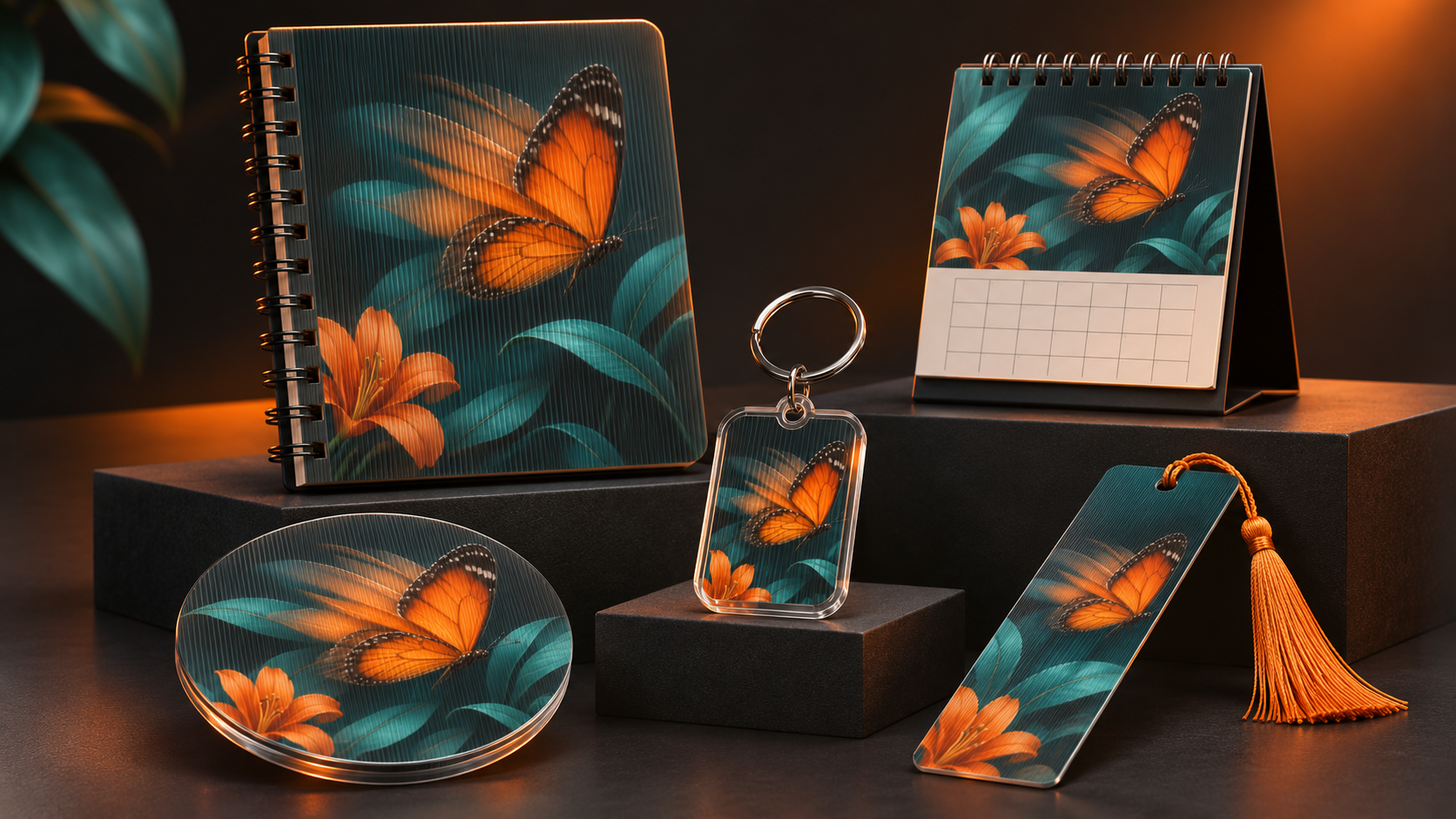
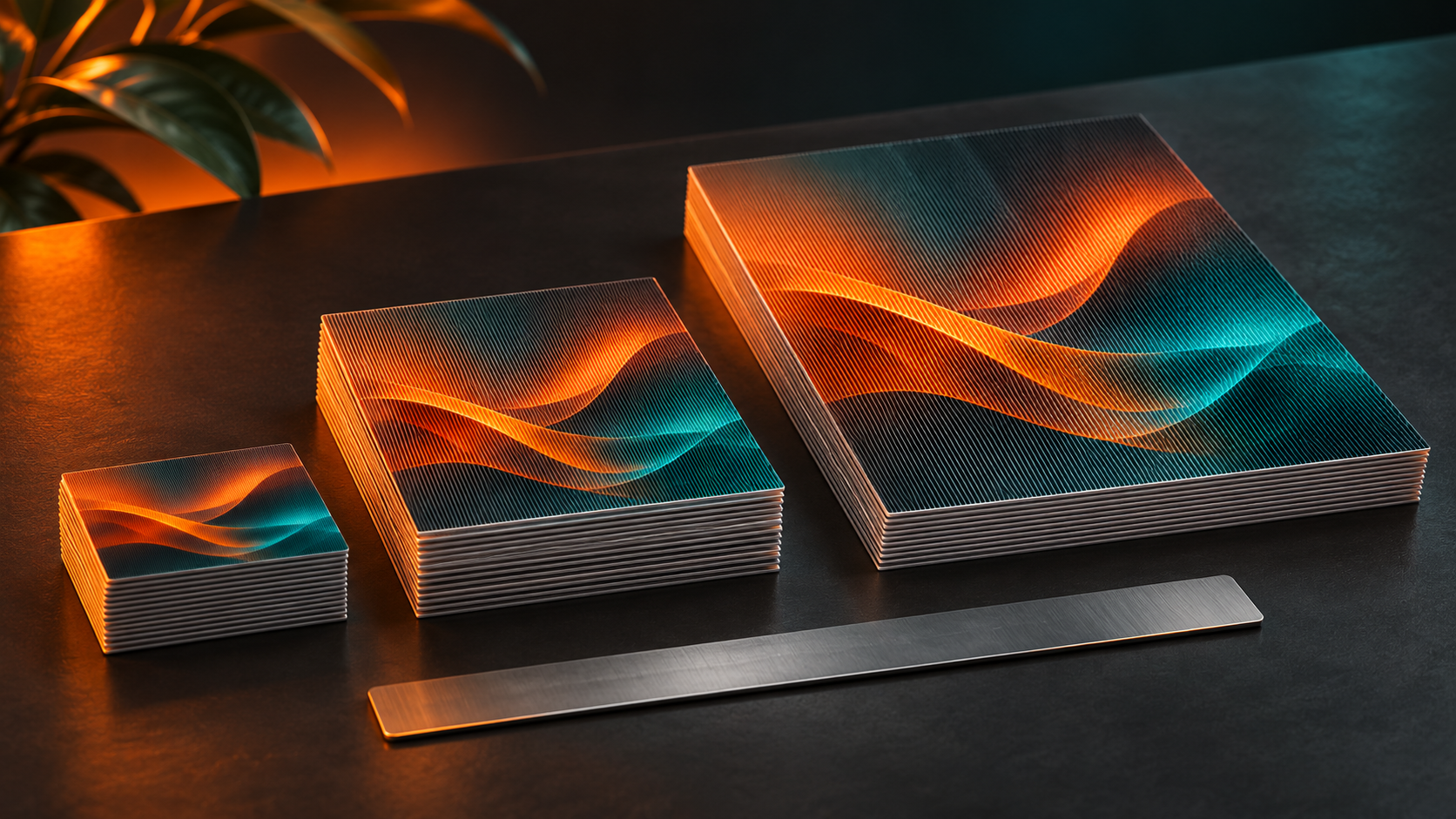
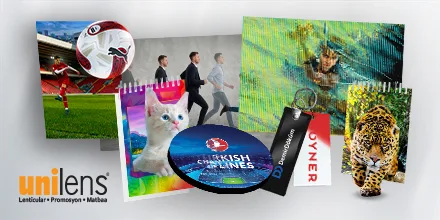
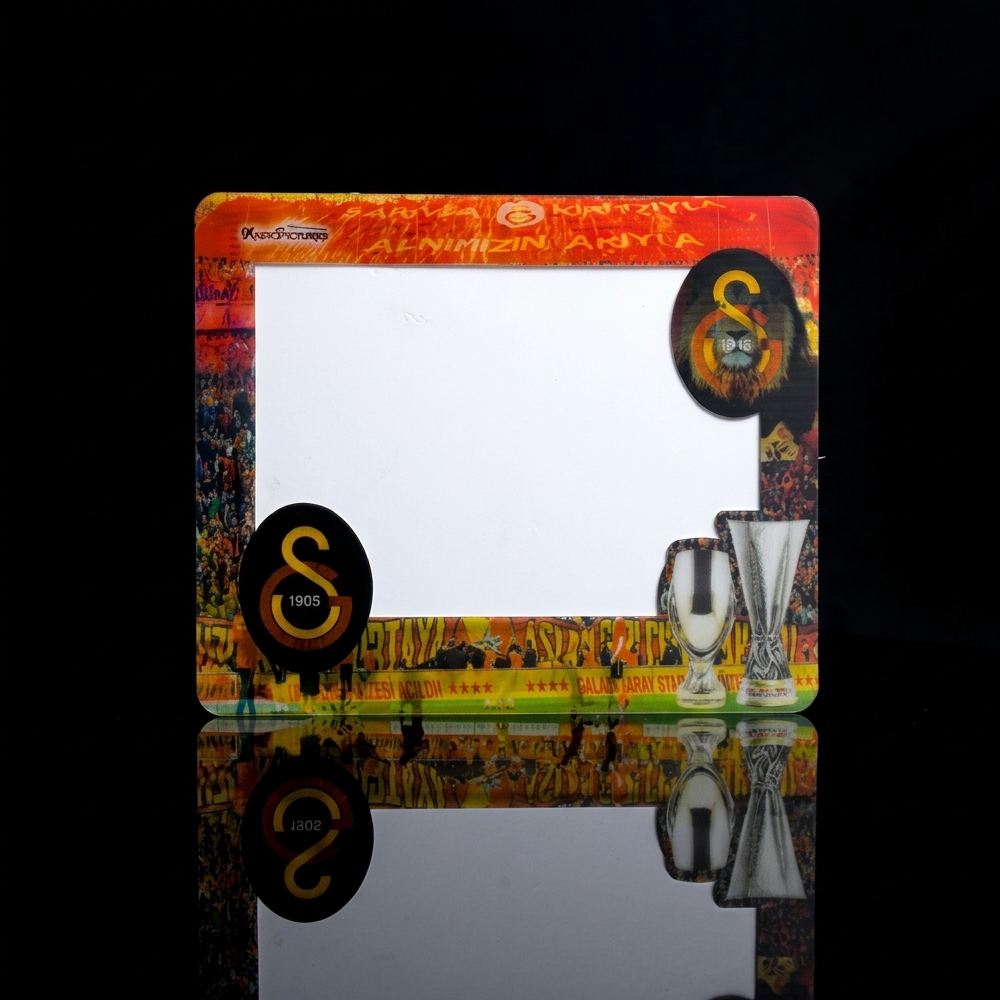
The Unilens product range includes applications such as lenticular brochures, rulers, bottle openers, calendars, and publication covers. The appropriate format depends on where the target audience will use the product. An item intended to remain on a desk and a material that will be examined briefly at an event are not planned in the same way. Rather than selecting a product solely by its appearance, usage habits, distribution method, and the environment in which the message will be read should be considered together.
Which questions should be answered first for a successful project?
The first question is what you want viewers to understand. Will you communicate one product benefit, compare two options, or introduce the brand's visual world? Next, establish whether the product will be held in the hand or displayed in a fixed position, and approximately how far away it will be viewed. These details are project inputs that guide technical preparation. Answering them before design begins helps prevent major changes later.
The second issue is the priority of visuals and text. Placing numerous explanations, logos, campaign conditions, and changing scenes on the same surface can make the message difficult to follow. Starting with one main visual, a short headline, and a clear contact direction is a more controlled approach. If longer explanations are needed, they can be considered for the back of the product or a linked digital page. This decision should be made according to the design's intended use.
How does the process move from design to production?
A project can begin with a needs summary. This includes the product type, dimensions, quantity, application area, intended effect, and delivery expectations. The suitability of the visuals for this idea is then assessed. Missing files or scenes that need to be prepared again are identified before production. Keeping written records of decisions made during preparation helps the brand and production team share the same expectations.
After design and technical preparation are completed, the approval method is established. An animation viewed on a screen can be useful for communicating the idea, but there are also situations in which the physical product needs to be assessed. Selecting an appropriate sample or proof is therefore important. Following approval, production, inspection, finishing, and shipment are planned. The delivery time for each job should be clarified according to its scope rather than assuming a single time frame for every product.
Common mistakes when ordering lenticular printing
One common planning mistake is selecting the effect and only considering the application environment afterward. Another is assuming that text which seems clear in a small digital preview will be equally easy to read on the final product. Design assessment should be based on actual dimensions and the usage scenario. Comparing quotations also requires more than looking at unit prices; the scope and approval conditions must be comparable as well.
Another risk is the desire to place every brand message on one product. Because a lenticular surface can offer more than one image, it may be tempting to treat each scene as a separate advertisement. However, the way viewers move the product cannot always be controlled. Carrying the main idea consistently across scenes may provide a clearer experience than presenting disconnected messages. The success of the project depends on designing the technical effect and narrative together.
Which examples can you share during the first discussion?
When sharing an application you like, explain what interests you rather than sending only its photograph. Is the important feature the changing image, the depth of the scene, or the product format? This distinction separates an expectation of reproducing a reference from the goal of developing a new idea. Including usable visuals belonging to your own brand makes the discussion more concrete. You do not need to guess the reference's dimensions or technical characteristics if you do not know them. Sharing known information and leaving unknown details open helps the right questions to be asked. By the end of the first meeting, the communication objective can therefore be as clear as the product name.
Prepare a brief application scenario before requesting a quotation
Imagine, for example, that your brand is introducing a new range of drinks. Instead of telling the entire product story at once, your goal might be to make two flavours visible. You can then write down which product will appear in the first and second scenes, where the shared headline will sit, and where the material will be distributed. A scenario like this makes decisions concrete before visual preparation starts. As well as thinking about how many different people will examine the product, it is useful to consider how long each person might hold it.
The same approach can be used in corporate presentations. The first image might explain the need the company wants to address, while the next presents its solution. These are suggested creative structures, not promises of a particular sales result. The aim is to define clearly which communication task the physical product will perform. Once that task is clear, the format, text length, visual sequence, and call to action can all be assessed against the same goal.
Frequently asked questions
Do you need glasses to view lenticular printing?
A properly prepared lenticular depth effect can be perceived without special 3D glasses. The visual experience depends on the product's design and viewing conditions. The environment in which the project will be seen should therefore be shared before production.
Can every photograph be turned into a moving print?
A photograph can be a starting material, but the desired effect may require additional frames, separated layers, or new visual preparation. The file's suitability should be assessed against the intended result. Sending one image does not mean that every kind of effect can be produced in the same way.
Does lenticular printing require electricity?
The angle-dependent image effect of a printed lenticular surface does not require an electrically powered screen. An illuminated display system can be planned separately for an application. In that case, the print's optical effect and the display equipment's energy requirements are considered separately.
Shape your project with Unilens
To turn your lenticular printing idea into a concrete project, first describe the experience you want to create. Share your target audience, the application environment, approximate dimensions, and planned quantity. If you have a reference image, explain which feature you like. The discussion can then develop around the message your brand wants to communicate rather than only a product name. Contact Unilens to assess product and effect options for your application.
Explore related lenticular products
Visit the pages below to compare the applications discussed in this article with available product options.
To see other formats, explore the lenticular products category. To assess options suited to your dimensions, quantity, and effect expectations, contact Unilens and request a quotation.